Barry Jenkins’ The Lion King has sparked a significant amount of discussion ever since its announcement. The acclaimed director, known for his powerful storytelling in films like Moonlight and If Beale Street Could Talk, was tasked with the challenge of bringing a new version of the beloved animated classic to life. Yet, despite the excitement surrounding Jenkins’ involvement, the result has left many fans questioning whether the film lives up to expectations.
At first glance, one might assume the problem lies with Jenkins himself—or more specifically, with his handling of the source material. After all, The Lion King is an iconic film, revered for its breathtaking animation, unforgettable music, and emotional depth. How could anyone possibly improve upon such a masterpiece? And when you add in the bold decision to remake the film with hyper-realistic CGI animals, it’s easy to see why audiences might have been skeptical.
However, the problem with Jenkins’ The Lion King isn’t even the problem. What people are overlooking is that the issue isn’t about whether the movie is successful as a remake, nor is it about Barry Jenkins’ ability to direct. It’s about something deeper—the very nature of the story itself and how we relate to animals, both in the fictional world of The Lion King and in the real world.
The Elephant (or Lion) in the Room: Animals as Souls or Meat?
One of the most significant challenges that Jenkins’ Lion King faces is the issue of perception. The film is laden with anthropomorphized animals—lions, meerkats, and warthogs that laugh, sing, and reflect on the meaning of life. Yet, no matter how emotionally resonant these creatures are in the 1994 animated version, there’s an inherent problem when trying to make them feel real in a hyper-realistic world.
For many viewers, animals like Simba and Mufasa are far more than just animated figures or symbols of the natural world—they are characters with emotions, struggles, and stories that reflect the human experience. To see them as “people” is to emotionally invest in them, to connect with their pain, their love, and their journey. This is the key to the emotional depth of the original Lion King.
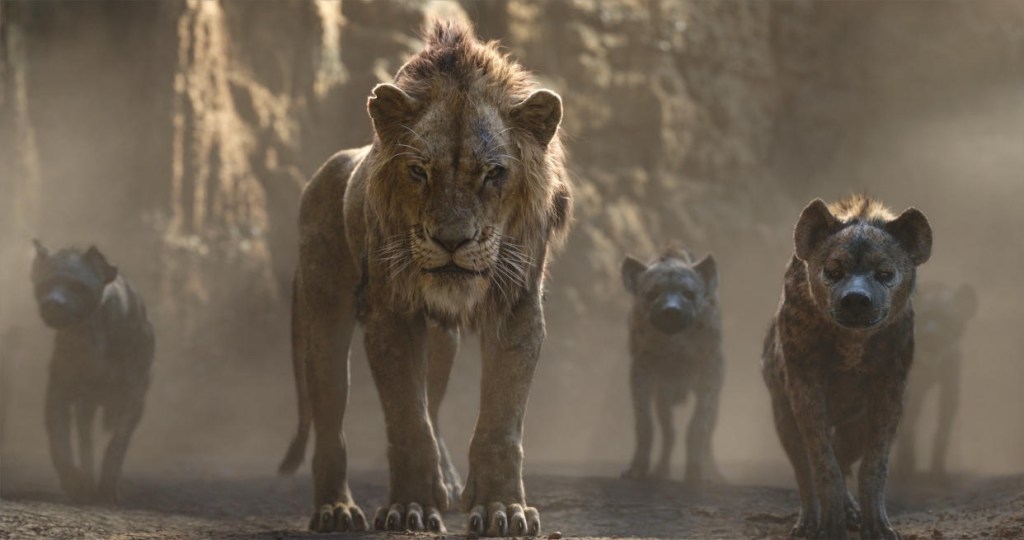
However, for others—especially in the context of Jenkins’ hyper-realistic visuals—the portrayal of these animals as “real” creatures may create a disconnect. If you see animals as souls with their own inner lives, their anthropomorphized personalities and struggles are easy to embrace. But if you view animals more pragmatically, as beings primarily driven by instinct or the “circle of life,” it becomes much harder to view them as anything more than actors in a story. The realism of the CGI animals may strip away the emotional layer that comes from seeing them as characters who can experience the same depth of emotion as humans.
The Real Problem: The Pressure to “Fix” the Original
When it comes to Jenkins’ Lion King, it’s easy to get caught up in the idea that the film is trying to fix something that wasn’t broken in the first place. The original Lion King wasn’t perfect, but it became a cultural phenomenon precisely because it resonated deeply with audiences on an emotional level. Its hand-drawn animation, music by Elton John, and narrative of family, loss, and responsibility have stood the test of time. For many, it’s a classic—a film that holds a special place in the heart.
So, when Jenkins was brought in to helm a live-action remake, the pressure was on. The expectation was that he would bring something new to the table while staying true to the spirit of the original. But therein lies the paradox: how do you improve upon a film that was already beloved? And how do you balance artistic innovation with the integrity of something that has become a cultural touchstone?
Jenkins, an artist known for his nuanced and emotionally rich storytelling, was faced with the challenge of navigating this tension. However, the problem with his version of The Lion King isn’t necessarily about the changes he made—it’s about the nature of a remake itself. The Lion King was already a timeless story, and attempting to reframe it through a hyper-realistic lens may have been an impossible task from the start.
The Root of the Issue: Not About the Film, But Our Relationship with Animals
The deeper issue at play isn’t about whether Jenkins succeeded or failed in remaking The Lion King. It’s about how we, as viewers, approach the portrayal of animals in film. The disconnect that many viewers experience when watching The Lion King isn’t rooted in the animation, the voice acting, or even the CGI—it’s about the fundamental way we perceive animals in relation to humans.
In the original Lion King, the animals were imbued with human-like qualities, which allowed audiences to emotionally invest in their struggles. But with the hyper-realistic approach taken by Jenkins’ remake, the characters’ emotions felt muted. It’s hard to connect with a lion that looks so lifelike but lacks the expressiveness that comes with animation. The realism, rather than adding depth, made it harder for many viewers to see Simba and Mufasa as anything other than animals.
For those who view animals as sentient beings with emotions and souls, the film’s hyper-realistic approach might have stripped away the very qualities that made the characters emotionally accessible in the original. For others who view animals more pragmatically, the film’s attempt to make them “real” may have been a reminder that they are, in fact, just animals—natural beings driven by instinct, not human-like experiences.
Conclusion: The Problem Isn’t the Problem
So, what’s the real issue with Jenkins’ The Lion King? The problem isn’t that the movie failed to live up to the original or that Jenkins wasn’t a good fit for the job. The issue is that the expectations placed on a remake of this magnitude may have been impossible to meet from the start. The film wasn’t meant to “fix” the original—it was merely a reimagining. And in the process of reimagining, it exposed the cracks in how we perceive animals in film.
The emotional depth that made The Lion King such a powerful experience for so many is not easily replicated. It’s not about the animation, the realism, or the voice talent. It’s about how we connect to the animals on screen. Whether we view them as souls with their own inner lives or as creatures bound by nature’s instincts shapes how we experience the story.
In the end, the problem with The Lion King isn’t even the problem—it’s the expectation that a remake could ever recapture the magic of the original. And perhaps the real question is whether we, as audiences, are ready to accept that some things are better left in the past, untouched and perfect in their original form.
 CHRONICLED by Brusheildon
Leave a comment