James Gunn’s Creature Commandos, the first animated installment in the revamped DCU, is a thrilling yet surprisingly nuanced series that transcends its action-packed exterior to deliver a thoughtful critique of societal issues. By blending offbeat humor, dynamic characters, and biting commentary, the show deftly addresses themes like U.S. foreign policy, policing, and the ethics of power while also exploring the intricacies of toxic relationships.
A Thoughtful Look at U.S. Foreign Policy
At its core, Creature Commandos is a story about a government-sanctioned team of misfits tasked with covert operations, often in morally ambiguous scenarios. Through its satirical lens, the series critiques the United States’ history of meddling in foreign affairs under the guise of “maintaining order.” Missions framed as heroic often lead to unintended consequences, leaving viewers to question the cost of interventionism. By presenting conflicts from multiple perspectives, the series humanizes the so-called “villains” of these operations, challenging binary notions of good versus evil.
Policing in U.S. Cities: A Reflection of Power Dynamics
Domestically, the show draws parallels between the Commandos’ operations and systemic issues within American policing. The militarization of the team’s missions and their often heavy-handed tactics echo the issues of overreach and bias in law enforcement. Characters like Frankenstein and the Bride of Frankenstein struggle with societal alienation, serving as metaphors for marginalized groups navigating systems designed to suppress them.
Toxic Obsession and Abusive Relationships
One of the show’s most poignant storylines is the toxic dynamic between Frankenstein and the Bride. Frankenstein’s obsessive need to reclaim the Bride portrays the controlling nature of toxic relationships, while the Bride’s journey to assert her independence highlights the struggles of breaking free from abuse. Their interactions—charged with love, regret, and anger—illustrate how possessiveness and unresolved trauma can twist affection into control. By grounding their supernatural conflict in deeply human struggles, the series provides a raw, empathetic exploration of power dynamics within intimate relationships.
Character Spotlight: The Commandos

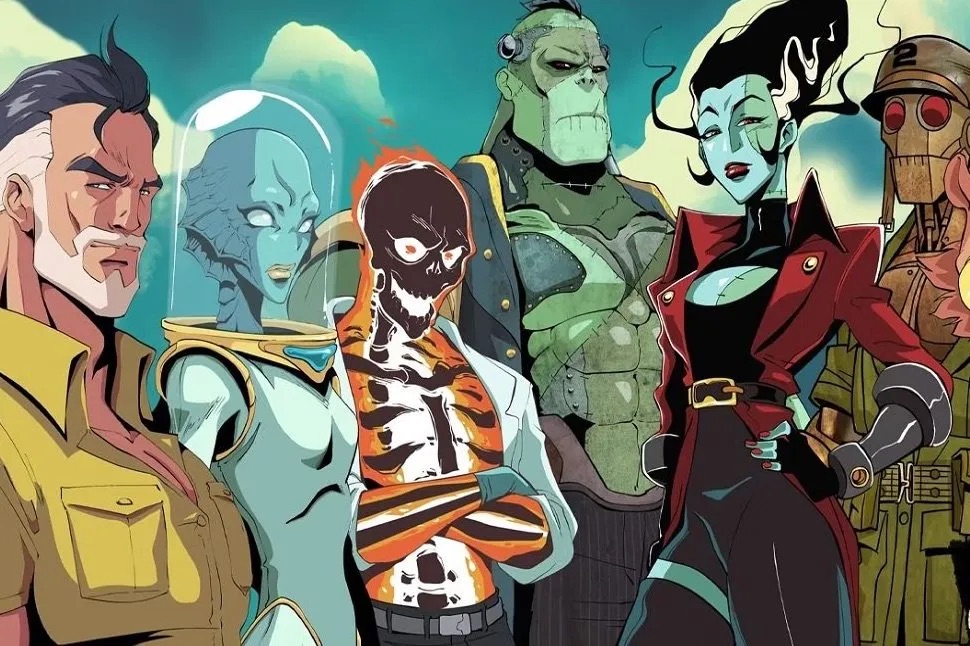
The ensemble cast brings a mix of humor and heart to the narrative, each adding a unique perspective:
• Rick Flag Sr. serves as the authoritarian leader grappling with his own disillusionment in the system, representing the conflict between duty and morality.
• Nina Mazursky, a scientist-turned-amphibian hybrid, embodies the consequences of sacrificing humanity in the pursuit of progress, paralleling how societal systems often dehumanize individuals in favor of efficiency.
• Dr. Phosphorus, a radioactive skeleton, represents the dangers of unchecked ambition and the struggle to reconcile a destructive past.
• G.I. Robot, a sentient war machine, critiques militarization and the loss of individuality in service to the state.
• Weasel, the chaotic wildcard, serves as a reminder of the absurdity of labeling some as “monsters” when the true villainy often lies elsewhere.
This eclectic team, with their unique struggles and camaraderie, underscores the series’ themes of systemic failures and the resilience of those marginalized by society.
Balancing Action with Social Commentary
What sets Creature Commandos apart is its ability to navigate these heavy themes without losing its sense of fun. The witty banter and absurdity of a team comprising a radioactive skeleton, a fish-woman, and a gun-toting robot prevent the series from becoming overly somber. Yet, amidst the humor, the show never trivializes the issues it examines. It strikes a delicate balance, ensuring the commentary enhances rather than detracts from the storytelling.
Conclusion
Creature Commandos is more than a rollicking superhero tale; it’s a thought-provoking exploration of modern power dynamics and human relationships. By tackling complex topics like U.S. foreign policy, urban policing, and abusive dynamics, it elevates the genre and proves that animated series can be as intellectually engaging as their live-action counterparts. Gunn’s clever writing and nuanced approach make this a standout entry in the DCU, leaving audiences entertained, reflective, and eager for what’s next.
 CHRONICLED by Brusheildon
Leave a comment